Thursday, October 18, 2018


TEACHING & LEARNING

[I ask your indulgence . . . the past 10 days have been crazy-busy. I've seen two doctors, a dentist, and a clinic where they do the Dracula thing and sip out a little blood. Nothing wrong with me, except that I don't seem to have a handle on scheduling. These are all routine medical visits. Then there's the annual election period for medical insurance coverage--had an appointment for that. And a haircut. 
And--and--and--

So, here's a repeat post, one I'm especially fond of, because it deals with two of my favorite things: teaching and learning.]


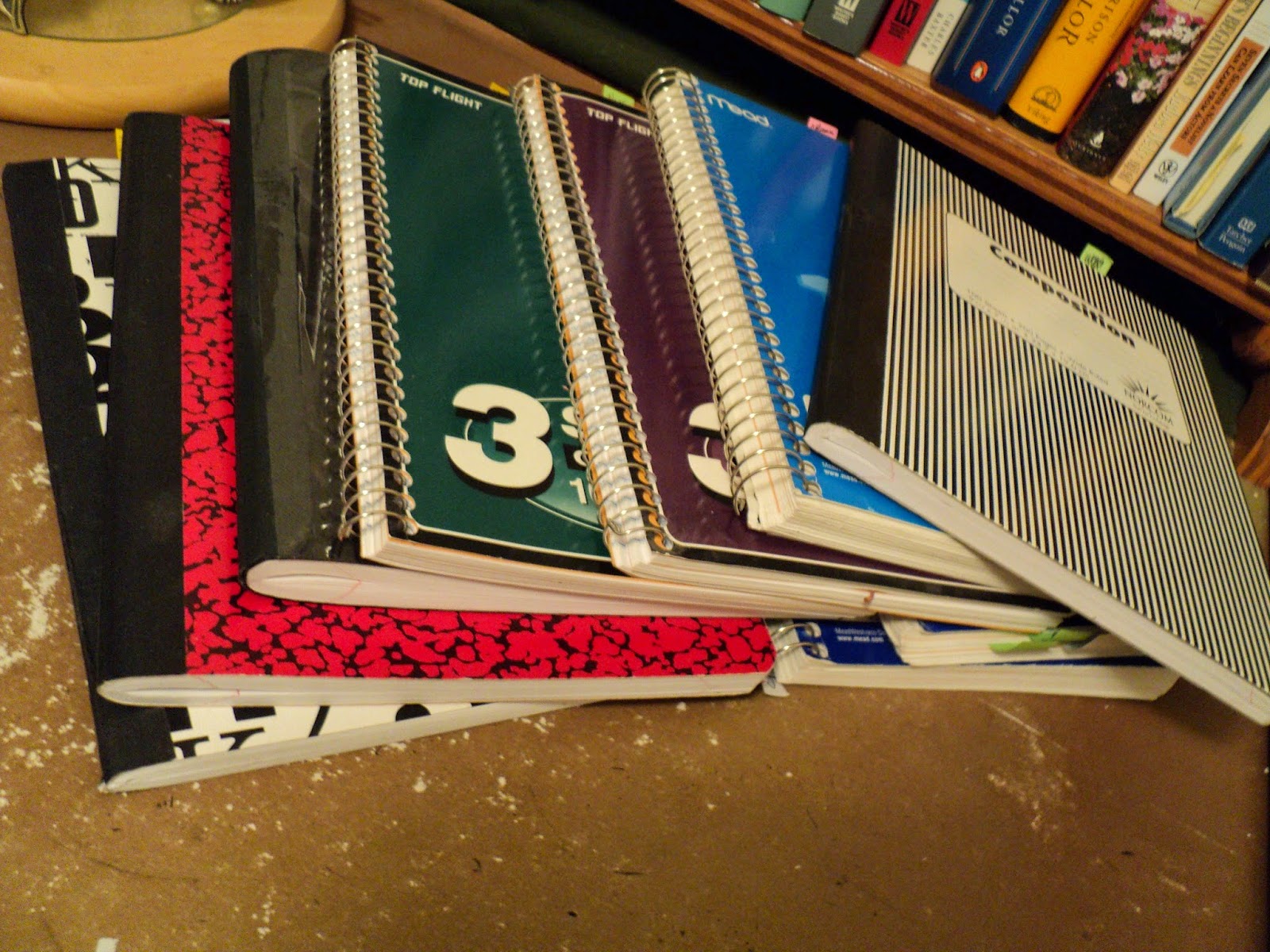
In September, 2000 I began journaling daily. September is the start of my personal year--a holdover, probably, from when I was a perpetual student, loved school, and summers were just annoying periods of being hot and unhappy until fall approached and school doors opened once again.
Anyway. That's beside the point, sort of.

My journals are dumping grounds for information, quilting diagrams, emotions, you-name-it. Journals have also become a wonderful way for me to explore ideas.

Take yesterday--I never know where the nudge comes from, but I often find myself writing about something I might want to blog about one day. That morning's nudge was about lessons I've learned--how we learn from each other--about being a teacher, or an example, to other people.

Lessons come from everywhere: friends, family; strangers; neighbors; my dog. . . . Here are some random thoughts from my writings:
  • I learn about unconditional love and forgiveness from Joy, my dog. If you've ever owned--or been owned by--a dog, you'll recognize their seemingly infinite capacity for love and devotion. They forgive your bad moods, your ranting about something totally unrelated to them, your forgetting to fill their water bowl or feed them on time. I find that love and forgiving nature quite humbling.
  • I learn that time and distance mean nothing with true friends. One friend of over 40 years' standing is as present when she comes to visit three times a year as she was when we spent hours together every single day during our college years. We seldom write letters or emails or talk on the phone. We don't need to, because we are so in tune with each other.
  • I've learned about friendship among people with radically different beliefs--there's always some point of contact, some connection that allows us to know we're friends.
  • Another lesson has shown me that young people the ages of my grandchildren can be my friends--it's a matter of finding similar interests and respecting our differences; and then being present with each other. Caring is another word for it.
  • I constantly learn from my children: about their worlds/careers/interests. They share their beliefs (which are not always the same as mine), knowing that our mutual love and respect mean that we can discuss a wide range of topics without animosity.
  • I learn that caring for others is alive and well in my neighborhood--we have only a few young families, with school-age children; most of us are 60+, retired, and in various stages of our lives. Yet there's a little network of checking in with each other, looking for signs that someone needs help, taking food to share with a shut-in down the street. The younger folks get into the act, helping rake leaves in the fall or shovel snow.
Sometimes I wish I'd known these things much earlier in my life . . . they might have been quite useful. But then, each lesson came when my life was such that I needed that bit of wisdom, that insight.

-----
Teaching and learning are wonderfully symbiotic--teaching someone a skill leads to the teacher learning something as well. And a pupil learning something new becomes, unwittingly, perhaps, a new disseminator of that same bit of knowledge.

A number of years ago I taught freshman composition at Purdue University. Every semester I learned something I hadn't known before. Most of my learnings were about people. With each new group, the chemistry changed. Classes were composed of varying ages: high school graduates, returning students who had left for some reason, or adults recognizing a need or desire to get a degree. My favorite classes were the ones with students ages 18 to 40 (or older). With no planning on my part, I often witnessed the older students teaching the younger.

One year we had an assignment to read about a Christmas celebration. In class, we discussed the reading and told about our own experiences. A quiet woman in her 50s startled the rest of the students by saying, "Christmas Eve is the loneliest time of the year."

I've never heard a classroom grow so quiet so suddenly. The woman went on to say that she had no family, and all her friends went to their families for Christmas.

Clearly, younger students had never experienced such a thing. They were stunned. I suspect a few did understand because their Christmases weren't happy ones. But the majority were hearing about a lonely Christmas for the first time.

That experience happened over 30 years ago. It still lives for me as one of the finest examples of learning from each other, in an informal way.

-----


Book learning has always been important to me. I don't know what I'd do without books.

But the best lessons--the ones that stick with me longest--are the ones I learn from people.


There's no substitute for family . . . our earliest lessons come from the folks who welcomed us into the group, nurtured us, disciplined us, and eventually shoved us out of the nest.

Today I celebrate teaching and learning. I celebrate the teacher in all of us, and the lessons we've learned--quickly, painlessly; or the tough ones that make, perhaps, a bigger impact.

Keep on learning. And teaching.

Thursday, October 11, 2018

LEAVING HOME

[Every year, it seems, we have weather disasters. At the moment Hurricane Michael is in the news. Do we really have so many? Or do we just hear more about them nowadays? Whatever the situation, each news report of a new hurricane heading for U.S. coastal areas reminds me that I'm not completely immune to disasters. The Midwest has its tornado season, and there are always wind/hail storms that come along with thunder and lightning. What would I take if I had to leave my home? I explored that topic a year ago and it's still valid.]

I'm not a news watcher, but I get plenty of information--'way too many videos--about disasters in the world. They come to me via The Weather Channel, which I consult daily for settling questions of wardrobe, heat or a/c in the house, and should I even venture out.

Last Saturday my long-time friend from college days called on her cell phone to say she and her two "kids" (Border collie mix dogs) were on their way from Tampa to Atlanta to stay with family. She had food, water, etc. for herself and the kids; what she needed was fuel for her vehicle.

While she drove, she told me about the oncoming traffic--squad upon squad of emergency vehicles, all kinds, heading into the disaster area, mainly the west coast of Florida, hard hit by Hurricane Irma.

-----
Her phone call brought it all home to me. These things don't happen in a vacuum. They don't happen to "other people" and so I can shrug them off, change the channel, and say how thankful I am that I live where I do, in northeastern Indiana, where we don't get hurricanes or tropical storms. (We do get tornadoes, though.)

The rector of our church has kept us apprised of the best ways to help disaster victims--through our own church's disaster relief program and other organizations, such as the Red Cross. And we pray each week for those families and homes and cities in the path of destruction.

-----

All of this causes me to think how I would approach leaving my home.

What would I take with me--not knowing how much space I'd have when I got to a shelter? (See photo at left.)

What would I leave behind--not knowing if I'd ever return, and if I did, would I find anything left of the life I'd had to abandon?

In past years, when tornado watches morphed into warnings, I grabbed a gallon of distilled water, a flashlight, sweatshirt, pillow and blanket, and climbed into the bathtub. My cell phone was always with me for updates. When the dog, Joy, lived with me, I took her food and water bowls into the bathroom, along with a few treats and some newspapers for her potty needs. Then I shut the door and we listened to the wind roar and buffet the house. (I still recall Joy's puzzled look--she had a lot of  facial expressions--as we spent an hour or so in this tiny room, me in the tub, she on the bathmat beside me.)

Sometimes I took my laptop with me, if I remembered.

-----
What would I take now, if I had to evacuate the entire house and go with people I don't know to a shelter some place?

First, obviously, myself. Medications I have to take regularly. Bottled water. Cell phone.

Beyond that, my laptop; a book to read (preferably one of those 500+ pagers I can escape into); clothes I like--hoodies, sweat pants, tee shirt, walking shoes with heavy socks. (I'd probably have to wear them, with no time to pack a bag.)

If I had sense enough to think of it, I'd take my cell phone charger and the hookup for the laptop. But if I'm in crisis mode, it'll be whatever I remember in the seconds I actually have to think about those things.

-----
When I was a teenager, I remember how much my clothes meant to me. Looking back at it, I think that was because I had very little in the way of possessions. My clothes were me. I had very few books at that time, very few LPs. The house wasn't mine, nor the furniture.

Now, I can walk away from all kinds of things, mainly because I've had a lifetime of accumulating books and music, clothes and fabrics and yarn, furniture and dishes and ornaments. And a house and car.

Yes, I'll miss some of them, if I have to leave them to their fate. But I had to go forward from a house fire, when I was 14, in which we lost virtually everything, and not grieve about what I no longer had. Grieving didn't  bring anything back. And every time I've moved from one house to another, it seems some things never turned up in the unpacking. (Maybe they went to where all the socks go when we end up with one black, one blue, and one gray.) I could do it again. If I had to.

-----
What it boils down to is this: All the things in our lives are just that--things. Stuff. We won't be able to take it with us when we die. We could leave it to our heirs--but do they really want it? 

I hope and pray you and I won't have to go through the disruption of our lives that occurs when disaster strikes. But if we do, then I wish us strength and courage to go forward from where we are. We can spare a thought to the memories we have, but turn aside from grief over things.

-----
P.S. - My friend in Florida is home again--no damage to her house! Thanks be!


Thursday, October 4, 2018

IN PRAISE OF SEASONS


[Geese flew overhead yesterday morning when I took my morning walk outside. Later I ran errands all over town--leaves have changed color on nearly every block. They all reminded me of the joy of the four seasons. Here's one song I sang a few years back.]

If I have a favorite month it would have to be October—for her color, her cooler temperatures, her sunny days—October could have been designed especially for me. And on clear days when the sky is a blue found at no other time of the year, I recall a portion of a poem by Helen Hunt Jackson, of Amherst, Massachusetts, writing in the 19th Century:
   O suns and skies and clouds of June, 
   And flowers of June together, 
   Ye cannot rival for one hour 
   October's bright blue weather;

-----
Autumn’s passing leads to Winter, and I can hear already the moans, groans, and grumbles of those who “hate winter”; can’t stand to live up north all those long, dark, cold months; or who proclaim it to be the ugliest time of the year.
Really? I’ll agree in part—the cold gets to me and I miss the longer hours of daylight. But ugly? I love the pen-and-ink-drawing quality of a winter landscape. Shadows harbor blue tones. Trees reveal their structure. Evergreens stand out against the subtle whites. Winter always makes me think of “Stopping by Woods on a Snowy Evening,” Robert Frost’s famous poem; here it is in its entirety:
Whose woods these are I think I know.   
His house is in the village though;   
He will not see me stopping here   
To watch his woods fill up with snow.   

My little horse must think it queer   
To stop without a farmhouse near   
Between the woods and frozen lake   
The darkest evening of the year.   

He gives his harness bells a shake   
To ask if there is some mistake.   
The only other sound’s the sweep   
Of easy wind and downy flake.   

The woods are lovely, dark and deep,   
But I have promises to keep,   
And miles to go before I sleep,   
And miles to go before I sleep.

-----
I will admit, I’m ready for Spring when everybody else is. Of course I’m thinking of soft breezes, soft sunshine, soft green grass and plants. In reality, Spring in Northeast Indiana brings snow, fog, cloudy days, rain, thawing, mud, and freezing mud. But by April—ah, April, T. S. Eliot’s “cruelest month.”
From The Waste Land, Part I-Burial of the Dead:

APRIL is the cruellest month, breeding
Lilacs out of the dead land, mixing
Memory and desire, stirring
Dull roots with spring rain.


April became the cruelest month for me when my mother died during my sophomore year in high school. Even today, I am vaguely unhappy during April, no matter how many flowers bloom, how gentle the breezes. But the time passes, and May comes with more and more flowers and trees in bloom and bushes putting forth fragrant perfume. And I am solaced.
-----
From John Keats’ poem, “On the Grasshopper and the Cricket”
The poetry of earth is never dead:
   When all the birds are faint with the hot sun,
   And hide in cooling trees, a voice will run
From hedge to hedge about the new-mown mead;

That is the Grasshopper’s--he takes the lead
    In summer luxury,--he has never done
    With his delights; for when tired out with fun
He rests at ease beneath some pleasant weed.

Summer was always the season when time, for me, ceased to pass. Summer went on forever. Summer never seemed to end. For me that was punishment; I longed for cooler weather, school books, and teachers. (Being an only child meant I had no one to play with. But I managed—I lectured my dolls and made up stories.)
Now that I’m an adult, I distract myself from summer’s too-long visit with enjoyment of my neighbor’s roses, or the lovely shade of the trees surrounding my house.
-----
Seasons have come to mean more to me than merely changes in the landscape and activities to suit the time, temperature, and condition of the sky.
SPRING is a time of new beginnings; a time to sow, or prepare, or plan.
SUMMER is a time of growth, of tending what has been sown, of appreciation for what is growing.
AUTUMN brings harvest, and a time to take one’s ease after the previous work of Spring and Summer.
WINTER allows us rest, when much of life lies dormant, waiting for a new Springtime.
We can experience all the seasons of life—sometimes in one day, or during one project; in our homes, at work, at school; within ourselves, moment to moment.
If you live in other climates and don’t experience the change of seasons as dramatically as we do in Northeastern Indiana, look for signs of your own seasons—they may be more subtle, in color, shape, length—but you’ll find them. Look within. You’ll find them there as well.


Thursday, September 27, 2018

NEW RIDE!


She's not my little deuce coupe, and I won't ask her to do 140 . . . but she's a sweet ride!

I discovered there's nothing like having no vehicle to make me feel that I don't belong to the world at all.

Last week's day-by-day replay for you had a lovely ending when I picked up my new vehicle on Friday.

So far she's been to church, to my usual shopping stores, to the P.O. drop box, and the bank. Last night she took me to see my Ohio daughter who works in a nearby town.

Today--big trip!--we're taking friend Jane to Shipshewana, Indiana, a quilting and craft mecca in the heart of Amish country.

So far, my new baby has no name. Would you like to suggest names for her? Here are her specifications:

     - Chevrolet Equinox, 5 years old
     - Silver
     - AWD, nice CD player, back-up camera (never had one of those)
     - great gas mileage (another luxury for me)
     - more seat positions than I thought possible, and lumbar support
     - and more bells and whistles than I've had time to explore

Drop us an email or visit in the Comment section below. Your email addy and any other personal info will not appear on the 'Web, just your name.


-----
While we're on the subject of naming a car, I'll segue into the subject of anthropomorphism. 

Anthropomorphism has been around probably as long as the planet Earth. According to the Oxford English Dictionary, it is "the attribution of human traits, emotions, or intentions to non-human entities."

Do you talk to your computer? Your car? Your refrigerator/television/lawn mower? Your dog/cat/horse/iguana?

Do you treat those non-human entities as if they could answer your questions, respond to your commands (animals will sometimes do this), or explain why they aren't in the mood to do what you're asking of them? (In my experience, computers are about as moody as a 13-year-old with zits.)

You've probably read a number of fiction works that rely on or employ anthropomorphism. Here are some examples I found when I researched the subject:

Alice's Adventures in Wonderland (1865) by Lewis Carroll

The Adventures of Pinocchio (1883) by Carlo Collodi
The Jungle Book (1894) by Rudyard Kipling

The Tale of Peter Rabbit (1901) and later books by Beatrix Potter

The Wind in the Willows by Kenneth Grahame (1908)
Winnie-the-Pooh (1926) and The House at Pooh Corner (1928) by A. A. Milne
The Lion, the Witch, and the Wardrobe (1950) and the subsequent books in The Chronicles of Narnia series by C. S. Lewis
The Hobbit (1937) and The Lord of the Rings (1954–1955), both by J. R. R. Tolkien

Fiction, fantasy, fairy tale--all employ anthropomorphism.

Also--movies:

The Wizard of Oz
E.T.
The Lion King
Star Wars
Harry Potter and the . . . .

-----
While you're thinking up great names for the Equinox (my new car, remember?), I'll get out the manual and see if I can ring some of the bells and sound the whistles. Next time we meet, I'll give you an update.


Thursday, September 20, 2018

STONE TABLETS...

Every day I write a Today List. You remember the Today List? I put down on paper the tasks or chores or reminders I'll need to get through the next 12-18 hours.

Since I also make a list for the following days, clear through the week, I have a sense of satisfaction that I won't make horrible blunders (arriving on the wrong day for a dental appointment is one red-faced memory) or miss an important event (nothing like showing up early, late, or not at all for a party/study group/rehearsal) or finding the fantastic discount on a product I really really need expired the night before.

Some people call this trying to control everything. They're probably right. But I work more productively when the events of my everyday life are corralled on paper.

One lovely feature of the Today List is the opportunity to enlarge it. Or mark through one of the items. Or put nice big check marks by the things accomplished.


What if--heaven forbid--I'd had to create my list with chisel on stone? How do you correct any errors? Or change dates and times? Or add another item? (Currently I squeeze add-ons in between the lines on my paper.)

-----
Two days ago I took my car for its regular oil change-etc. Usually I wait while the guys do the service thing, but they planned to flush the cooling system so I got a ride home and waited for a call. While I waited I did some other things on my list--started laundry, cooked apples, talked with two of my daughter on the phone.

No phone call from the service guys. Okay, they were busy at the automotive center. When it became obvious I wasn't going to get my car back in time to knit with my friend during her lunch hour, the phone rang. "This isn't the call I wanted to make today," the owner of the shop said. That's a  heart-stopper if I ever heard one.

Turns out my 19-year-old Buick was very terminal. As in, not safe to drive. 

Well, that certainly wasn't on my Today List.

First things--call and cancel knitting. Call and cancel an evening visit to my daughter who works second shift in a nearby town. Call a friend to arrange transportation around town on the following day to do important errands.

-----
Yesterday my friend Jane chauffeured me around--all the errands got done. We spent a half-hour or so looking at vehicles--I found one that pleased me, asked a lot of questions, and what I forgot, Jane asked for me. Took the vehicle for a test drive, had it vetted by the guys who always work on my vehicles (it got an A), and by two o'clock I'd done part of the paperwork to purchase a new set of wheels.

All the running around and lunch at Jane's house and the test drive took up most of the day. I got home at 2:00 and crashed. Had to cancel an appointment at the church, but arrangements were made for a telephone conference call for that meeting.

In the evening I cancelled the Friday meeting of Heart & Hands, not knowing if I'd be able to pick up my "new" car in time to get to church to sew blankets and pillow cases for the NICU.

Today I'll visit my friendly banker to see if she'll let me take out some of my money, and Jane will drive me and a check to the car place.

-----
Thank heavens my Today Lists are on paper. I don't know if the dust would have settled yet if I'd had to chisel all those appointments off and carve new ones.


Thursday, September 13, 2018

BACK IN THE DAY - Comfort Food

[The weather is changing--every half hour a new phase, it seems--but right now we're in cool, windy, almost-autumn days and downright chilly nights. Weather like this leads me right into thoughts of good, warm, filling food. After I read this blog, posted in 2014, I knew it was the right topic for today. Hope you have great memories of your own comfort foods.]


After a recent influx of children and visitors, I found myself with odds and ends in the refrigerator. One day we had chicken breasts simmered all day in the slow cooker, which yielded a quantity of homemade stock or broth. We'd eaten all but one portion of the chicken in various guises--chunked up with rice and steamed veggies was a favorite.

Last night I discovered the remains of the broth and the last portion of cooked chicken, plus a few steamed carrots that somehow escaped being eaten. There was no leftover rice, but--in the pantry, I had packets of instant mashed potatoes, all flavors, that cook in three and a half minutes and are creamier and tastier than any I can make when I start with raw potatoes and good intentions.

The chicken and cooked carrots were easy to heat up. The potatoes did their 3 1/2-minute turn in the microwave. And the broth--heated to boiling with the addition of a little cornstarch, salt, and pepper--became gravy. It's been ages, maybe years, since I've had mashed potatoes with real gravy.


But, back in the days of my youth, I recall simple meals, well-seasoned, hot and tasty, that were what we now call comfort food. Potatoes and gravy would have been one of the easiest. Once the potatoes (from scratch in those days, naturally) were cooked and mashed with butter and milk, seasoned with salt and pepper, and served for supper, we always hoped for leftovers for potato pancakes another day.

We used no convenience foods, except canned tuna and salmon, Spam (which I actually ate and liked, I'm sorry to say), and canned soups from the Campbell Soup Company. And if there were other things available, my mother never bought them. She could make the best meatloaf and baked potatoes I ever ate. I have no idea what she did to her meatloaf, but mine never tasted as good.


I remember starches figured in most of the meals--macaroni with cheese (baked, not cooked on top of the stove); spaghetti with a mouth-watering meat sauce made the same day, or my personal favorite, meatballs--they took longer so that's probably why we seldom had them; fried potatoes with hamburgers, mashed potatoes with fried chicken, boiled potatoes with pot roast; sweet potatoes for special occasions, like Thanksgiving, though I don't remember turkey was a regular on the holiday table--probably a roasted chicken.

These are fond memories--food has always been one of my favorite things--and I'm glad my mother and her sisters were such good cooks. They've inspired me down through the decades of my own  planning, preparing, cooking, serving, and (of course) eating. For years I used only fresh ingredients, but as life got more hectic--four children in six years, going back to college to finish my degree, getting a job once the children were in school full time--yes, life became hectic, so I learned to use some prepared foods to supplement what I cooked from scratch.

All of my children cook--some like it more than others, but they all know how. My son and middle daughter like to experiment to come up with new things or twists on old faves. They all like to eat, as well, so our family gatherings are gastronomic delights.

At times when we don't have a big meal, we enjoy simple things: one of the evening meals I shared with my daughter last week was scrambled eggs, bacon, and gluten-free pancakes with real maple syrup. We both agreed breakfast foods could be eaten any time of day.

Although my childhood memories of food are good ones, I don't yearn for those times. I've cooked on a wood burning stove, a one-burner camp stove, a campfire, gas ranges, electric ranges...but I don't need to return to homesteading days. They're romantic to read about, I'll grant you, and we can learn a lot from the trials, tribulations, and triumphs our forebears went through. I'll stick with my modern range and refrigerator, cook veggies and poultry or fish from scratch, and once in a while whomp up a batch of gluten-free pancakes. Then I can eat a meal like those from my childhood while I read that book about homesteading.


Thursday, September 6, 2018

SOME PITFALLS OF

Everyone speaks of downsizing in positive terms--pass along unwanted items, my trash may be someone else's treasure, make room in closets/drawers/storage space (not sure what the space is for), and so on.

Downsizing being one of the bandwagons I hopped on a while back, I've been working on the tasks required to achieve the removal of unwanted, trash-to-treasure, space-occupying Stuff.

Take yesterday, for example. Really, go ahead and take it. I don't want it back.

Here's how it all fell out:

--I made a firm decision to clean out the two 4-drawer filing cabinets that have accumulated their trash/treasure over a period of years. (This was intended to be a manageable task for a morning. Or maybe the week.)

--After my morning walk at the Y and a session with my journal and breakfast, I was ready to tackle those filing cabinets.

--Dressed in old clothes, face mask for the dust, and vinyl gloves to protect my hands from whatever might have migrated into those eight drawers, I moved the car to the driveway to give myself more room, and I opened the first drawer.

From there it seemed an easy-peasy task. Look through the Stuff stored in the drawer, decide if it was recyclable, disposable, or keepable. (Sorry--I wanted a parallel word. Just roll with it.)

All went well into the first and second drawers, but I discovered quilting magazines and even hard-bound books cowering in the third drawer. Those required closer examination.

Then there were the seven 3-ring binders that were perfectly good items to have on hand. (Not sure what I'll do with all seven; maybe use them for stocking stuffers at Christmas.)

Also found art supplies, along with sketches I'd made in the early '80s--they looked like something from an art class that I vaguely remember taking.

And another find was a package of long-lost brown lunch bags--they're used by some quilters for small trash bags for clipped threads and snippets of fabric trimmed off--not so big they get in the way, and easy to attach to a sewing table with masking tape. When the bag is full, it's whipped off, the tape closes the trash inside, and the whole thing goes in the big wheelie bin.

What delighted me most was a brand new, perfectly preserved, 2004 J. C. Penney catalog. I set it aside to browse through later.

-----
So what are the pitfalls, you ask?

#1 - Distraction. I never got to the second 4-drawer filing cabinet. There were so many neat things to look at that I used up my energy in the hot/humid garage on the first cabinet and had to quit after an hour.

#2 - Satisfaction too early. The trash pile (after an hour's effort) was sufficient to fill three garbage bags--though "fill" is misleading: I can't lift a full 55-gallon bag, so each bag was only about a third full. They made a resounding and satisfying plonk in the trash bin, though. I have a feeling I'll be buying more boxes of bags soon.

#3 - Discovery of Usable Resources. Some of the quilting magazines and books will have to be read, that's all there is to it. They've been around long enough to have some value (to me) as the patterns will appear new--never mind that the magazine was published in 2006.

Thus what I'd considered an hour's work (both filing cabinets) turned out to be two hours; since I did only one filing cabinet, I expended only one hour of effort. (Caveat: If I apply that equation to the rest of the garage, I may still be sorting and discarding in 2025.)

And let's not even consider the house, which has its own accumulation of treasures, etc.

-----

I'm thinking of staging a Trash Party--everyone brings a big trash bag, wears old clothes, and we all downsize together. I'll provide the lemonade (hot weather) or coffee & tea (cold weather). Feel free to bring your own food.