Thursday, July 18, 2019


A LETTER TO MY FRIEND ON THE OCCASION OF LETTING GO
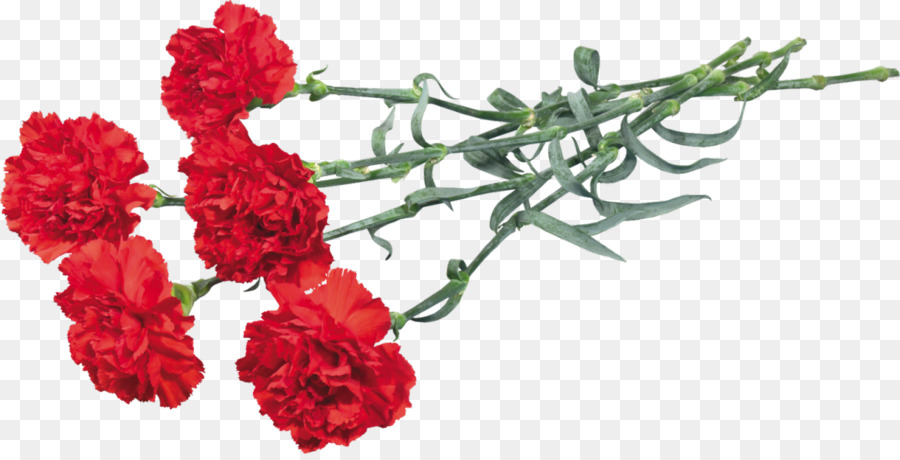
[One of my dear friends died last week. I'm repeating this post because among the parts of my life that are disappearing are those who have to move on because of ill health and need new living arrangements to keep them safe, and those who have passed to a new realm. I know God is with them, and I pray that they know God is there. Always.]


My dear friend,
You have been working at your task for some years now. I recall the time you boxed up newspaper cuttings, greeting cards, notes from people you had helped expressing their gratitude—boxed it all up and left it to be collected the next time the city truck came through.

At the time, I wondered how you could let go of all those things. My accumulation is similar, and I’m finding it difficult to cull the items I still want to hang onto.
Why, I wonder, is letting go so hard?

Did you find it so? Did you agonize over whole stacks of letters dating back thirty or forty years?
Much advice is written—and re-written—in magazines, newspapers, on the Internet—but it boils down to this: “If you haven’t used it in the last _____ years, pitch it.” The only difference from writer to writer is the number of years—3 years? 5 years? 10 years?

What about something that has lasted 25 years or more? Does it now have antique value? Do I care about that?
-----

You’ve given me good advice about this letting go business. Take, for example, clothing.
·         Each time you buy new items, get rid of the same number of old ones.

Okay, I can do that. I usually have plenty: too-small, too-large, wrong color, scratchy, too hot, too cool—easy to find the right number. Sometimes, I say proudly, I can discard/donate even more items than I just bought. How about that? And since I don’t buy trendy styles, what I remove from the closet isn’t any more attractive than what I put in its place. The big advantage in taking this advice is that I don’t have to build another closet (or room) to house an increase.
Books, now—that’s a different story. I know you’re not a collector, and you take pleasure in passing on to other folks many books you’ve enjoyed. But you also keep some, because, you say, those authors pleased you and became like good friends; you look forward to rereading those stories.

So I’ve "taken a page out of your book" about books:
·         When my taste changes, I can recycle books by donating them to my library for their monthly sale or to the senior center where a minimal charge for used books puts a few dollars in the center’s piggy bank. If the books are mysteries, I check with my children first—they like different kinds, so I may be able to pass along something they haven’t read.

The hardest category for me is correspondence. In my younger years I wrote and wrote and wrote letters to my nearest and dearest. The Internet and email changed that, and though I still write letters, they’re usually typed to save my aging fingers. But receiving letters! What a joy! There’s nothing like a real letter, written/typed on paper, put in an envelope, and sent off via the USPS to arrive at my house. A cup of tea, my feet up, and I’m transported into the world of my friend or relative who sent the missive. It doesn’t get much better than that. No wonder I have trouble disposing of those good times, represented by letters and notes.
-----

In thinking it over, I’ve concluded that letting go involves more than sorting, discarding, and bagging it up for the trash collection next Monday.
Letting go means a break in a relationship with the items from which I’m parting. For out-of-date clothing, books I no longer read, there’s no trauma. But for very personal items—reminders of who I once was, who I still am deep down, and what I meant to somebody, sometime . . . the letting go can be painful.

So I ask myself these questions: Do I need those items to remind myself of who I was? Don’t the memories attached to letters, photographs, greeting cards remain with me?
-----

You’ve purged many, many things from your life. And I find you are still the same person, without all the physical baggage that you’ve shed.
Thank you for letting me see how that works.

With love and appreciation for who you are,
J


Thursday, July 11, 2019

THOUGHTS ON GRADUATION

It's been decades since I went through a graduation ceremony. Don't remember much about it, except that I was wearing white high-heeled shoes, and my name was called halfway through the alphabet, so I had plenty of time to wonder and worry if I was going to disgrace myself by falling up the steps to reach the Superintendent of Schools who was giving out diplomas, or if I was going to, instead, fall down the steps on the other side as I exited the stage. Neither happened--I made it up and then down, intact and upright, diploma clutched in my sweaty hand.

In memory, graduation from high school took place on a Sunday afternoon, and I started college the next day. Probably it wasn't quite like that, though I did indeed go to summer school at the college in my town. I took 12 weeks of Chemistry--the whole freshman year: 4 weeks of 101, 4 weeks of 102, and 4 weeks of 103. We had class and labs from 8 AM to 4 PM, five days a week. By the end of the course, it was September and my schedule included English, Math, Physics, and 200-level Chem courses. For me it was the big time.

-----
Some of the rituals for school graduation remain the same--diploma ceremony on a Sunday, party at home in the back yard/community room/country club/library/fire house, wherever a venue is available--then a summer of fun/work/prep for college--and before you know it, the graduate is thrown out into what seasoned folks love to call The Real World. (What do they think school days are? Make believe? Fantasy Land? It's all Real World. Just different arenas.)

Other parts of the moving-on business are very different nowadays.

I don't remember anyone in my era graduating in January. But it's not uncommon now. Students can also take college courses in their high school--get credit for high school and for college. One advantage is that some of the lower level college courses in English and Math can be taken while in high school and thus free up college time for electives or, more likely, additional course work in the major area of study.

-----
Graduation as a rite of passage makes sense. It's a signal, a sign, a physical experience that means we step out of one kind of life into another.

In the school district where I live, 5th graders had a graduation program or party; one school conducted a 5th-grade walk to visit former teachers; these students will go to the middle school in August. Middle School 8th-graders had a day out for a movie, cookout, and yearbook signing. High School students participated in graduation walks to their former middle and elementary schools.

And then there are those who rack up a lot of college course hours in our pursuit of Perpetual Student status. For those people, graduation day never comes.

I confess to having continued long after the normal time for finishing a degree. These days we like to say we're "lifelong learners," a lovely phrase that lets us keep on studying and learning and never graduating. But we thought of ourselves as perpetual students, and had to field the "real life" question at every turn.

For some folks it may be a cop-out--if we're always learning, that's a good thing, right? But what if we never apply what we've learned? Is it good to say we're "going to be" instead of saying "we are"? Apparently hard questions appear in all phases of life.

-----
There are other kinds of graduation experiences.

Some folks see getting married, starting a family, buying a house as the natural progression from being a single to being part of a new family.

Career-minded people, single or not, look for advancement in their chosen fields of endeavor. Gain experience, try different fields of work within the broader picture, test the waters in a sideways move--all are ways of continuing to learn, and continuing to move forward.

Retirement means, for some, a kind of graduation from a "regular" job into an abundance of time to enjoy life as All-Sorts--family stuff, travel, part-time work, volunteer work, making a former hobby or side interest into the main show.

-----
I heard a few days ago that public school starts in about four weeks. Four weeks! Good grief--I thought we just finished graduation parties. While students return to classrooms in August, the recent grads will be gearing up for college classes, heading off to boot camp, filing job applications and securing interviews. Some will continue with jobs they've had during school.

-----
The underlying message here seems to be--Life Goes On. 

Nothing stops - you pause to catch your breath - then you continue on a path. If you don't like that path, or it doesn't help you be the person you picture yourself to be, then you find and pursue another path. Life goes on--and on--and on.

And we can be grateful for that.


Thursday, July 4, 2019

FROM SEA TO SHINING SEA


Today we celebrate Independence Day. On this day in 1776, men from 12 of the colonies signed a Declaration of Independence from the mother country, England. The official vote in the Continental Congress occurred two days earlier, July 2nd. After that vote, a committee headed by Thomas Jefferson wrote the official Declaration.

John Adams, one of the delegates, had written a letter to his wife, Abigail:
The second day of July 1776, will be the most memorable epoch in the history of America. I am apt to believe that it will be celebrated by succeeding generations as the great anniversary festival. It ought to be commemorated as the day of deliverance, by solemn acts of devotion to God Almighty. It ought to be solemnized with pomp and parade, with shows, games, sports, guns, bells, bonfires, and illuminations, from one end of this continent to the other, from this time forward forever more. [from Adams Family Papers, Massachusetts Historical Society]
------
The United States celebrates in solemn events and riotous ones, from the serious contemplation of what freedom means to the joy of being able to express our gratitude openly.

However you celebrate--if you do--remember the men who made that possible 243 years ago. And be safe.


Thursday, June 27, 2019

DOWNSIZING A LIFE

[This post was published several years ago . . . and I promised to report back on my progress with downsizing. This is the report back. The progress is negligible. Or, in simpler terms, nearly non-existent. My justification for rerunning a report on a project that failed isn't because I'm masochistic--it's because I hope my very public failure might just goad me into something that resembles success. I'll report back on that also.]

Before we get off on the wrong foot, we better come to terms with...well, terms.

Downsizing, yes--making smaller.

A Life--not the day-to-day living, shrinking my existence to something unrecognizable. No, just some of the stuff that has accumulated over the life I've lived.
For example, take my garage--please!


I ought to be ashamed to show pictures of it, but I'm not, actually. Those boxes and bags and file cabinets represent a large portion of my life in physical objects you can hold in your hand. Books (fiction and nonfiction, texts), college notebooks, papers from various organizations I've been involved with. Fabrics from early years of sewing kids' clothing, later pieces bought for quilts (still in the planning stage). Art and needlework books in the filing cabinet. Little Amazon.com boxes with tax returns from past years.

Do I need all that? No, I don't. Some of the tax returns are old enough now to be shredded into obscurity. The art and needlework books have served their purpose and will be donated to the library, either for their shelves or the monthly sale. If the fabrics are still good, I'll donate them to the local senior center where various crafters check out the items for sale. Books--if they're still viable, they'll go to the library, possibly to the local charities for sale by them.

Papers, now--there's a problem. When I see them, I remember the time I spent in an extension homemakers' club and the women who came to the meetings. Or the time I taught a spiritual journaling class for my church during Lent. Another time I taught a one-time seminar on journaling for writers, and how they could use the entries in the journal in their projects. Do I need them now, to remind myself of who I was? I don't think so. Who I was is now and forever part of who I am.

Letters and cards are in a whole separate category. Not sure I can bring myself to destroy them. Cards, eventually. Most don't have notes in them. But letters--now that we're letting the art of letter writing slip into history, letters are precious to me. They represent the time someone spent to let me know how things were with her or him. They bring me back to a time we shared ideas in depth, long letters full of not only what we were doing but what we thought about it; and we shared our feelings, as much as we could reveal, about how our lives were going, our children, our ups and downs.

I won't go into detail about the five closets and linen shelves and drawers in the house. A brief overview--recent purges of clothing that no longer fits made room. But not enough. Closets will have to wait while the garage takes its turn.

Over the past, oh, decade or so, I've been reading about how to organize, how to sort and make room, how to deal with stuff. So I know the theory. Make 3 boxes, and mark them: KEEP, DISCARD, DONATE. Then follow the instructions you marked on the boxes. DON'T, whatever you do, remove anything out of the DISCARD or DONATE boxes and KEEP it! I'm going to try it. Hope it works for me.

Now to put it into practice. I'll report back...sometime. Don't hold any breaths waiting.


Corralling fabrics


Thursday, June 20, 2019

A look at perspective

[Yes, a rerun, though I changed the title. I read it through and discovered I'm re-visiting one of my perennial problems...not enough time to do what I want to do. This post looks at that "not enough time" issue--it's all about perspective. And while we're at it, will somebody please look into the irritating recurrence of these same problems/issues/irritations? Thank you.]

There’s a line in The Golden Spiders, by Rex Stout, that I really like:

Archie Goodwin is badgering Nero Wolfe to do some work:

“You’ve always said it’s not enough to earn your money—you have to feel like you’ve earned your money. So let’s earn our money.”

-----
[Note: This post is not about making money. Sorry. You really don't want to get advice from me on making money. Trust me on this.]

A couple of months ago I had a day when I did several things, and accomplished a lot, for me. By the end of that day I had the satisfaction of time well spent. I felt—emotionally—as if I’d accomplished a lot. Some of that satisfaction came from knowing I’d finished something: a task, one large part of a task, or even a small step.


I won’t tell you what all I did—I do hate to see your eyes glaze over. But I say proudly, I wiped out, completely, my Today List. And it wasn't a short list either.

Sometime back a blog post by the late Writer/Teacher Louise De Salvo entitled “Little by Little” explored what it means to make progress on a project when you have a debilitating disease or condition. Louise De Salvo never knew ahead of time how much energy she would have the next day—maybe none. Maybe only a short time to do a little writing. If it’s 10 minutes, then she used those 10 minutes. If it’s an hour, then she wrote for an hour. And the work got done, “little by little.”

I found her blog post inspiring. Too often I sigh and ignore the little bits of time that could be used to move a project forward.

Do I really have to wait for two hours of free time? Isn’t there something I can do in whatever time slot I have available?

The late Nancy Zieman, host of a long-running quilting/sewing TV show, Sewing with Nancy, believed that's possible. She published a book called 10-20-30 Minutes to Quilt. There’s another inspiration. For each quilt she lists the steps: what can be done in 10 minutes (choose fabrics, perhaps), 20 minutes (cut fabrics), and in 30 minutes (assemble quilt blocks).

My job: Look at my Today List and estimate how many minutes each task will take.

Besides tasks, I like to build in time to rest between, say, starting laundry and vacuuming the hall and bedrooms. This isn’t lying down for a nap kind of rest; this is doing something sitting down—writing checks, knitting a few rows of an afghan, looking through a music book for pieces I can learn. Then back on my feet for the next activity.

-----

The true issue at hand, I believe, is perspective. Remember the old glass half-full vs. the glass half-empty? Time perceived as "too little to do much with" is still the same amount of time perceived as "just enough time to do one step of that task."

One of the most positive people I know is my family doctor. We discussed time one day--I think the subject was time to read--and she said two minutes might be all the time she had but she'd use those two minutes to skim an article.

Perspective--what you see from where you stand--has a lot to do with perception.

If you're standing in your own way, you won't see anything but your own reflection. If you get out of your own way, you might see something new--or something old in a new way--or something old that can be morphed into something new.

Perspective influences perception, which leads to possibilities.

There you go--three words that begin with P. Juggle them and see what you come up with.

And have a Perceptive week, developed by looking from where you stand, into a future of possibilities.


Thursday, June 13, 2019

MID-TERM

We're sneaking up on the middle of the year. Here it is the 13th day of the 6th month.

In another week we'll welcome Summer. And a couple weeks after that, there'll be July 4th fireworks. (Those start in late June in my town, for some unknown reason.)

What can I say about the first half of this year, 2019? 
   --We had a lot of cold weather.
   --We had a lot of rain, after the cold weather.
   --We had hot days in January and February.
   --We had chilly days in May and early June.

Is that all I think about, the weather? 

Okay, here's something else. Students went back to school in January, had a number of snow days (that's old style) which have become e-learning days. Spring breaks happened. School buses parked for a couple of weeks. Then it was zippadee-doo-dah and school's out. Buses parked till August.


Apparently some folks got to plant gardens. Last night I was gifted a box of just-picked ripe Ohio strawberries, along with a couple slabs of gluten-free shortcake to keep the berries company. Makes me think of the gardeners' bounty to come: tomatoes, beans, squash, lettuce, and later on peppers of all colors.


-----
My life has been mainly dedicated to sewing for the NICU and finding music to play on Sundays at my church. 

Recently I got back into the reading habit. Finished two Maisie Dobbs mysteries (Jacqueline Winspear's creations) that I hadn't read before, and am working on The Once and Future King, by T. H. White (700+ pages; you might recognize parts of the story in the stage play Camelot).

My lawn continues to grow abundantly, as do the lawns all around me in my neighborhood. The peonies bloomed--some are ready for dead-heading--and nearly everyone has a bed of annuals or a hanging basket.

Birds are everywhere. The robin who built a nest on top of my outdoor light fixture (attached to the house) sits every day up there. Every time I hit the garage door opener button she takes off. Those babies will be neurotic.

And evenings we see walkers, runners, joggers, bike riders, dog walkers, and kids going wild.

Yes, we're gearing up for summer. We're a week early, but that's better than late.


Heirloom Tomatoes


Thursday, June 6, 2019

JUNE 6

1968 - Robert F. Kennedy, age 42, dies of wounds sustained the previous day when he was shot in Los Angeles; he has just finished a speech celebrating his victory in the California presidential primary.


-----


1944 - D-Day ("Operation Overlord") - Allies storm the Normandy coast; all five beaches are secured by the Allies. Soldiers from the US, UK, and Canada lose their lives.

". . . . . . by day’s end, 155,000 Allied troops–Americans, British and Canadians–had successfully stormed Normandy’s beaches and were then able to push inland. Within three months, the northern part of France would be freed . . . ." https://history.com/this-day-in-history/d-day

Note:  The National D-Day Memorial Foundation lists 4,414 names of Allied personnel who died on D-Day. This number was arrived at after intense study of various official sources and is considered a more accurate count than the estimates usually cited.

-----

I've read a lot about World War II; I've seen some movies set during that time. And though a large number of people liked the movie Saving Private Ryan, I couldn't get past the first three or four minutes. Never mind Stephen Spielberg directing, never mind Tom Hanks acting. Some part of me seemed to be in that time and in that place. I couldn't take it.

-----

I'm also not very political. I don't keep up with what's going on and argue with anybody who is on the "other side" from me. In fact, I find it satisfying that there is more than one side, more than one way to look at life, at our country, at the ways we govern. 

Today's post doesn't come with a happy ending. There is no ending. Wars come and go, and come again. Our country tries, as best it can, to help make things better. That may not happen, but then again, if no one tries, it surely will not happen.

-----

"Lest we forget" is appropriate at any time, not just Veterans' Day or Remembrance Day. If remembering the sadness, the pain, the horror is too much, then we can remember the good that was intended, the kindness of those who gave their lives. And give thanks for the love they showed, for us and others.