Thursday, April 28, 2016

HARD LESSONS - Becoming

When I was young, I envied other kids—their houses, their parents together, their siblings. I wanted the same clothes other girls had—or their looks—or their confidence. They knew when to speak up, they knew their place in the world.

I was stuck in my own growth because I looked at other people and saw what I was not, what I had not.

Later, I discovered other young moms lived in nicer houses than ours. Their children always wore pretty clothes. The family car was newer, or classier.

-----
Many years afterward, I learned a valuable piece of advice at a Weight Watchers meeting: “Don’t compare your inside to their outside.” What I saw in others wasn’t, necessarily, the whole truth.

Over time I began to learn a few things by observing the lives of others:
  •      Some young couples had huge debt to help them look good: big house, new car, pretty clothes.
  •      Some confident people were, in fact, pushy; some had no compassion for people in pain; some never saw below the surface in people.
  •      Some very talented people have unpleasant side effects--lacking in good sense, unloving to their children, gossipy and back-biting.

True, not all young people or confident people or talented people were like the examples I cite here. That’s one of the challenges of life—just when you think you’ve got it figured out, somebody comes along and makes you do a 180 in your preconceptions.

-----
Little by little I learned the nature of Envy, and why it is harmful. I read books, I listened to sermons, I began to ponder the details of other people’s lives.

The people I was drawn to most, the ones who remained friends for many years, were people who enjoyed the same things I did: a walk through the meadow at the farm where I used to live here in Northeast Indiana; or sitting and talking about literature, music, or art, while sipping herbal tea; or drinking wine and listening to Beethoven’s Seventh Symphony. (My first experience of Beethoven’s Seventh had me in tears.)

These lovely people took me out of myself. And by that simple, compassionate, caring act, they helped me banish Envy. Over time I began to be the person I wanted to be. Or, perhaps a better way of saying it is: I began to love the person I was becoming.

-----
I say becoming because there is no closure to this process of growing.

So I can say, with some regret, that the Envy I now harbor—I think it’s the only one—is the envy of people who are allowed to cry. To express their pain, their sorrow, their grief, their anguish.

From my earliest memories I was admonished not to cry. Not even when I got hurt. Not even—God forgive me—when my mother died. (My father couldn’t express his grief, therefore I shouldn’t grieve either.)

So as a young child I began to hide my tears, my feelings.

One of the first people to help me become a feeling person was Vira Marner Palmer. She was an outspoken, feeling woman who often voiced her opinion. When I married into the Palmer family, I gained a new mother.

More than anyone in my life, she knew what it was to be an only child whose mother had died too young. She was not a pleaser. I don’t recall seeing her cry, but I’ve seen her angry and heaping abuse on a man who was publically harassing her husband.

Before her death when I was 28, she urged me to go back to college and finish my degree. She had graduated from high school, and she was married to a college professor; her sons were in college pursuing advanced degrees. Vira recognized the importance of education.

-----
Learning goes on forever . . . and I’m still learning about Envy, among other things.

One important thing I know is this: No one has all the gifts/luck/possessions/talents. Each of us has some. And what we have is important.

Do not envy.

(That is my goal.)

Celebrate the good others do, or have.

(I try to do that.)

Becoming. That’s what it’s all about.


Thursday, April 21, 2016

In Just-
spring

This is what I call the e e cummings season, "mud-luscious" and "puddle-wonderful." Today’s forecast calls for rain, which was supposed to begin ten minutes ago; my guess is that it’s holding off till I get to Walmart’s parking lot and will let go the minute I open my car door. But that’s just a guess.

Just-spring here in Northeast Indiana comes with a full basket of tulips and dandelions, mowed yards, birds courting, bushes in red and green and yellow, trees in pink and white and magenta and yellow-green.

Landscaping is newly mulched. Gardeners grow antsy waiting for the frost-warnings to lift so they can be the first kid on their block with annuals shoving each other aside in hanging baskets and flower boxes and any little patch of soil that doesn’t have anything in it.

-----

Spring returns every year (March 21st in the northern hemisphere), with new growth in the earth; with hope for new beginnings (Easter is a spring festival, you know); with beauty so abundant you feel it will run right over you.

It’s overflowing and everywhere. And it’s for everyone.

Spring (with apologies to Janne Robinson for her lovely poem) doesn’t care: whether you’re black, white, Hispanic, or other. If you’re super-sensitive to pollen or criticism or penicillin. If you’re grieving or rejoicing. If you’re too old to, too young to, or don’t give a damn. If your income exceeds your outgo or you have no income worth talking about. Spring breathes on us, whether we like it or not.

-----
All the therapy in the world won’t take away Spring. All the fervent prayers, tears, threats, tantrums—no effect on Spring.

We’ll have to deal with Spring-endure it, embrace it; enjoy it, avoid it. Spring doesn’t care.

-----
If you see a white-haired woman in a black sweatshirt and New Balance walking shoes, carrying a box of Kleenex, that’s probably me. I’ll sneeze my way around the block, or the Y track on rainy days.

Spring doesn’t care.

But I do.

Celebrate Spring! And I hope you enjoy what She has to offer.


Thursday, April 14, 2016

LIZ FLAHERTY, ON FRIENDSHIP
Liz in Michigan
(and other stuff)

Please welcome Liz Flaherty, who tells wonderful stories about people you'd love to meet.


          Hello, and thanks, Judith, for letting me come back to visit. I’m all excited about my new book, Every Time We Say Goodbye, a release from Harlequin Heartwarming. I love the book. I love that I was able to use Cole Porter titles throughout its pages and that—even though my setting has made-up names—people who live around here will probably recognize it.

          But I don’t want to talk about that today. I don’t even want to talk about writing romance. Exactly. Because what I want to talk about is friendship.

          Judith and I met on the high side of 20 years ago when Jenni Licata singlehandedly wrangled the organization of an RWA chapter. We became NIRA, the Northeast Indiana Romance Authors. The chapter no longer exists, but lives were changed by that group of writers. Of friends. I have had 12 books published; I’m fairly certain if Jenni hadn’t sent the letter that made me a part of that first little group, I wouldn’t even have one.

          All these many years later, Judith and I still see each other a few times a year. We talk about kids and grands and quilting and church and writing.

          I have friends I met on the first day of the first grade. We meet once a month and have lunch. We celebrate each other’s joys, mourn our losses, eat too much and laugh a lot.

          Debby and I worked together for 30 years, often so in tune we could actually share a work station meant for one. One of my fears when I retired was that we wouldn’t be close anymore. I shouldn’t have worried.

          I have close, dear friends in Georgia and Kansas and Florida and Ohio and—how lucky can one person be?--I have a sister and sisters-in-law whose friendships I love having. I have online friends like Word Wranglers Kristi, Margie, and Ava and more writer friends than I can begin to name—many of whom I’ve never met.

          I don’t even remember how Nan and I met—I think we’ve tried to figure it out and possibly we’re both wrong. But friendship with her was an unexpected gift of being "of a certain age." While I cherished my old friends, I never expected to get another BFF. But I did.

          And then there’s my other BFF, the real best one, the one I’m married to.

          Oh, there it is. The full circle my favorite stories always are. Because along with being love stories, my books—and most other romance novels—are stories about friendships. The friendships, at least to the editorial staff—just kidding!--are usually secondary to the romance; we have to be careful that, unlike in real life, we don’t give them too much room. But the friends are still there, offering comfort and humor and fresh coffee.

          Writing romance lets us try to put into words the special friendship that exists between people who fall in love with each other. I’ve always been glad my husband and I were friends before we were anything else. I’m even happier we’re still friends.


          Speaking of full circle, I hope you’ll want to read about Arlie and Jack’s romance—and friendship—in Every Time We Say Goodbye. And, just to keep the conversation going, tell us a story about a friendship you’ve shared with someone.

Book #12!

[You can order Liz's book from Harlequin, online at Amazon and Barnes & Noble. And probably other places.]

Thursday, April 7, 2016

IN TWO WEEKS . . .

Do you know what’s going to happen in two weeks?


Yes, that will be April 21st. A Thursday.

All things being equal—my back/head/shoulder/arm being in good form—I’ll be going to tai chi class at the senior center. After class I’ll pack a lunch and go knit with my friend Emily while we nibble our salads and sandwiches, and share our lives.

Mostly, though, I have no idea what will happen in two weeks.

-----
A couple of days ago I went to the eye doctor for a regular exam. As I was leaving—writing a check, making the next appointment—I chatted with the office lady. We lamented the lack of nice weather and wondered if spring ever would arrive. “Two weeks,” she said.

That rang my chimes. One of my all-time favorite blog posts by Liz Flaherty was called “Two Weeks,” published in February 2015. Here’s a sampling of what she said:

I remember telling the kids that if they ever felt hopeless and unable to talk to anyone about it, to please, please, please wait two weeks. Because even though two weeks won’t go all that far in healing most wounds, it will make them bearable. And then when things get bearable, I said, give it another two weeks. This was in the 1980s—I’m still giving things two weeks.
Liz’s experience goes back thirty-some years—and today I hear echoes of it from time to time.

-----
After our lovely warm March days—high 50s and low 60s count as lovely and warm in my book—I had hoped (foolishly, as it turned out) we’d be having an early spring. Now we’re back to 20s and 30s at night, maybe upper 40s in the daytime, wind (always), rain (which we do need because we didn’t have much precipitation during the winter, but still--). And I have to report that I did already have my first attack of allergies, with sinus and asthma problems included in the package. That’s always a spring thing. So I have to say, spring is here. Sort of.

Bottom line: I’m ready for warm weather. I want to take off at least one of the layers I’m never without, “just in case” something meteorological transpires. I’d like to lower the car windows and let some fresh air blow through. Air, I said—not wind!


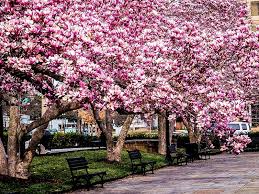
The neighborhood is beginning to color up—forsythia blooms right around the corner, peony and hosta plants are shooting higher out of the ground, seeking the sun. Daffodils in all their colors and varieties delight the eye around town. And before the recent 24-degree night, the magnolia down the way was gorgeous! (A friend at the coffee shop said her neighbor’s little girl caught sight of the magnolia in bloom and was awestruck! Well, I said, who wouldn’t be? A pink tree!) There’s plenty of solid evidence that spring didn’t forget us this year.

Probably I’m just regressing to childhood—I want spring, I want it all, and I want it now!

-----
Liz Flaherty’s advice:

When your wits’ end is approaching, give yourself two weeks. You can take them off, work on another project, or do something else entirely (I get lots of sewing done). You can even say you’re quitting and plan a whole new life without a laptop at its center. You can watch television, read some of your TBR pile or something off your keeper shelf that fills your well, or do nothing at all.

I love taking time off—and that’s a weird thing for a retiree to say, but it’s true as can be. When the daily/weekly routine seems to be too much same ol’-same ol’, then I’m for a day off. Or, as Liz says:

Your two weeks can last two months, two weeks, two days, or two hours. However long you need for things to slip back into place.
My recent time off was exactly two weeks. And I didn’t enjoy it at all—sinus congestion, coughing, sleeping whenever I wasn't coughing. No, not my idea of taking time off. But I have come back to my daily/weekly round with a renewed sense of getting things done. And even better, being grateful for good health.

-----
So when, as Liz Flaherty says, your wit’s end is approaching, give yourself two weeks. Till the planets tilt again and your life rights itself, and you look forward with clear gaze.
Have a great two weeks!

-----
PS—If you can wait only one week, you can read about Liz Flaherty’s newest book, Every Time We Say Goodbye, which was released April 1. Liz will guest blog here at Thursday’s Child next time. Come by and visit!


Thursday, March 31, 2016

CONNECTIONS – Part II

Two weeks ago we explored connections through history.

Today I want to consider connections through music, art, literature, and popular culture—ways of connecting ourselves to people long gone from planet Earth, to their creativity, their world view, their time and mores. In a sense, seeing with their eyes.

-----
I used to feel a deep sadness when I thought about Beethoven’s deafness robbing him of his ability to hear the grand and glorious music he composed in later years. One source reported that he was unable to hear either the orchestra playing his Ninth Symphony or the great applause that greeted its premiere.

After reading several articles about Beethoven, I no longer feel sad, because I’ve heard music inside my head, as he must have also heard what he was working on. What he missed was the orchestra’s interpretation of his symphony. What he always possessed was the way it was supposed to sound because he’d heard it first inside himself.

I have no training in art appreciation, so I bring very little knowledge to the viewing of a painting. What I can do, as I gaze upon the work of the Old Masters, is enter into their vision—see with their eyes for a short time. Was that man’s nose really that long? Was the woman’s chin so pointy?

-----

What draws me most, connects me strongly, is the written word. From my earliest reading on my own, I could see inwardly the scene unfolding in the story. Only black marks on white paper, but, oh--! People doing things—racing to catch a crook; dashing about the country roads with the top down on the convertible, dust billowing behind; creeping through the trees at dusk to spy on the inhabitants of the old abandoned mansion . . . . People saying things: dialogue to help the reader follow the sleuth’s thinking, or show character strength, or make the transition from one scene to another; dialogue to stimulate the mind.

Description also sucked me in—but only if it was good description. Long before I attempted to write stories, I “osmosed” the need for all five senses to make a scene “real”—to make a book live in memory.

-----
Early in my life I was allowed to stay up to listen to radio serials. The Lone Ranger was a favorite. Yes, I was one of the kids who lay on my tummy in front of the radio and “saw” the action in the cloth-covered speakers. Several years later, television appeared, but it never won me over the way the radio shows did. The stories about the Wild West appealed to me because my father had lived in Colorado in the 1920s and worked on a ranch as a young man. Whether he experienced any of the wildness of the time, I never knew. But I liked trying to picture him in that setting.

-----
Movies are a category of their own. I wasn’t crazy about historical novels, but movies set in old times, far-off places, could transport me immediately. Again, it was the visual detail that captured me. I was taken to see Gone With the Wind long before I could appreciate it, but later viewings gave me a taste of what it was like to live and struggle in the South during The War Between the States. Though I never knew my Great-grandfather Cather, I knew he fought in that war on the Union side. That knowledge gave me a different sense of what the war meant to people like me.

Historical shows are still popular: Downton Abbey, Foyle’s War, Grantchester, to name a few. They're set in the 1940s and 1950s--historicals? I remember those times! Does that mean I'm old? (Hmm, something to ponder.)

-----
My examples in this post come from times gone by. I've lived through many decades, so I know what the feelings were during those days, how we dressed, what was available in the grocery store. Connecting to someone who lived in my parents' or grandparents' time helps me understand them as young families--what they lived with, and through--and so my own ancestors become more alive to me.

-----
You'll find connections everywhere. You don’t even have to look for them—just recognize them when they occur.

They may be as near as your mailbox, when you get a letter from an old friend. Or as close as the movie theater or video rental store. Libraries offer such a broad range of subject matter, settings, and time periods that you can lose yourself in any era you select. Or, people you meet may open a window onto a time or place or way of life you never experienced.


Thursday, March 24, 2016

COMING SOON . . .

Baby peonies...on their way!
One of my favorite emails (there aren’t many, sad to say) is the one whose subject line reads: “Your order has shipped!”

In the days of long ago, an order was made out on the form provided in a catalog, put in an envelope, stamped, addressed, and mailed. No one acknowledged it had been received, but after waiting, sometimes impatiently, for a few weeks, suddenly a package appeared on the front porch, courtesy of the letter carrier. (Those days we called him the mail man.)

I don’t know which is better—a long wait, letting the anticipation of the coming items grow into a Big Thing. Or, with the click of a mouse button, letting the nice folks at L. L. Bean or Amazon or some other big chain know that I want my stuff ASAP. They always acknowledge that I’ve contacted them (“Thank you for your order!”). And they sometimes let me know the order is being processed. Okay. Great. Then comes the magic message, “Your order has shipped!” Sometimes this is only one day after I ordered. That’s service.

-----
I thought about the ordering process while I was working in the back yard yesterday. After several days of feeling under the weather (allergies, sinus problems—the usual annual annoyances), I discovered the trees had deposited another great load of little sticks, big sticks, long limbs, and a couple of chunks of dead wood (not sure about those) all over the yard. It was time to don mask and gloves, haul out the biggest bin for sticks, and pick up (changed to raking when I saw how many there actually were) as much as possible.

Lily leaves...overachievers perhaps?
Now the clean-up didn’t actually trigger thoughts on the ordering process. But as I finished I went around the yard and looked at various bushes, plants, and other growing things.

Lo and behold! The hostas were coming up, the peonies were 4 inches above ground, and the Resurrection lilies--! They’re way ahead of schedule.

I knew Spring had sprung when the neighbor-across-the-street’s daffodils blinded me one morning with their near-neon yellow mass. They live in a flower bed between the houses—just the right place for the sunlight to fall and get trapped for several hours, making an effective hothouse. Those bulbs bloom first of anything in our whole neighborhood.

So Spring isn’t coming soon . . . She’s already arrived. If you live in middle Indiana or farther south, this is old news. But for us up here in the northeast corner, Spring’s arrival lifted many a flagging spirit. And we didn’t have to search online to order!

Though Spring officially arrived last Sunday, March 20th, we’d been having warmer days for some time before that. And my highly unofficial records of daylight hours show that the Equinox occurred at approximately midnight on March 16.

-----
In the Spring, I have counted 136 different kinds of weather inside of 24 hours. --Mark Twain
(Mr. Twain is sometimes given to embroidery.)
-----
Besides beauty and longer hours of daylight, Spring is Renewal.

Renewal of Nature—we see this all around us, smell it when the blossoms open, hear it in the birdsong, feel it with the waft of a warmer breeze, even taste it (have you ever tried dandelion greens, or wild asparagus?).

Now, go deeper—how about Renewal of ourselves?

An overwhelming job, you say? Well, might be. It is for me. But if we break it down into do-able tasks, like anything we tackle, it may become less overwhelming.

So here goes: I’d like to renew myself in thought, word, and deed.

Thoughts can determine our attitudes. Being wound up in a tangle of ideas that never seem to resolve themselves creates in my little self-universe an attitude of “what’s the use?” Why bother? Someone else will clean up the world. Why fret over someone else’s “wrong” way of thinking? I’ll never change them. (See how it works? Not a pretty sight, is it?) If, instead of letting those thoughts veer toward the negative side of life, I keep them firmly in hand and head toward the sunny side, I find my attitudes smooth out. Maybe I can’t clean up the confounded world, but I can work on my own little corner of it. (I know, I’ve said that before. Still true.) And I can pray for the other person--not to change to what I want, but for whatever healing he or she needs.

Renewing myself in word turns out to be easier. That is, so long as I have control of my tongue and my fingers. No matter what technology has done for us, there is no DELETE button on our tongues, no UNDO icon to click just in time. If I’ve said it, then I’ve said it. And if it was hurtful, my best efforts are pretty wimpy—“I’m sorry” helps, but the words said . . . . 

The DELETE button does work when we write letters, emails, or comments on blogs. Always a good idea to reread what we’ve written—did it really come across as I meant it to?

The renewal of deeds—actions—is a whole other ball game. Now we're in the big leagues. What we say, what we think, are important, and can have lasting effects, good or bad. But what we do—that’s what people, complete strangers, see and experience of us. What do my actions tell about me? (This is scary, folks—like looking in a mirror and seeing an image you don’t recognize.)

One of my hardest actions to change is forgiveness. Not that I carry a grudge forever—these are the everyday little annoyances that seem to simmer and stew and affect my attitude (yup, back to that). Can I let go of the irritation I feel when someone cuts me off in traffic? Is there any reason to resent a curt voice on the phone telling me to wait? (This part of renewal is on my permanent Today List.)

-----
Using Nature as a guide, we can do our personal renewal step by step. Nature doesn’t fling out grass, flowers, fruit tree blossoms, high temps, rain and sun, all at once. There’s a logical progression—warmer days, plants emerging on their inherent timetable, rain; grass in its own time. Birds return in waves, not all at once.

So much is happening every day we tend to think it all came at once. But it didn’t. We, like Nature, need to take time for renewal. A cheerful note, a helping hand, a prayer for someone’s healing—seeking forgiveness from someone we’ve hurt—offering forgiveness to one who has hurt us.

Take it a day at a time, one step at a time. If we fall back, get up and begin again.

As my tortoise friends say: “Forward is forward.”

-----
In our competitive society we think so much about standards, about keeping up, or passing, other competitors, about reaching a goal, about winning.

With Renewal, there are only winners. We have our favorite flowers, birds, type of weather, but that’s only our own opinions. In self-renewal, there is only success, if you truly want to renew. That success may be incremental, almost non-existent; but consider—a seed looks mighty insignificant when compared to its full-grown plant.

Try a little renewal—you may surprise yourself at how you’ll blossom.

And while you’re at it, Celebrate Spring! Celebrate the season of hope, of new growth, and celebrate another chance at renewal.


Wonderful sight to greet the weary winter eye!

Thursday, March 17, 2016

CONNECTIONS – Part I

When I got a haircut in February, I scheduled an appointment for March.

“How about the 15th?” I asked the stylist.

“The Ides of March!” she said.

I came up for air on that one. Someone younger than I am—by over a decade—knows about the Ides of March?

About all I remembered about this date was a line from Shakespeare’s Julius Caesar: “Beware the Ides of March!” And it was good advice, because Caesar was slain by a large number of people on that date. (Maybe that’s where Agatha Christie got her idea for Murder on the Orient Express.)

Back to Ides of March. During the month following that appointment, my mind kept going back to our little conversational exchange about a date I figured almost no one remembered.

Besides Caesar, the other dire event for which March 15 was known to me was the date income taxes were due—this was before my time as a tax-paying citizen; we’ve had April 15th (or 17th this year) since, well, maybe forever.

[Now You Know: The first income taxes were due on March 1, 1913; changed to March 15 in 1918; and changed again to April 15 in 1955.]

-----
I’ve been thinking about my Ides of March conversation lately—to us, the date Julius Caesar was put to death (in 44 BC) is not only ancient history, it doesn’t relate to life today. Or does it?

How about, for example, the way we view history now? I’ll give you some personal examples:

·       I feel no particular reaction to March 15, but around the third week of November I start feeling uneasy—I recall watching our young president get shot in Dallas.

·       School starts in August in my neck of the woods. The second week of September I honor those who died in the attack on the Twin Towers in NYC. I don’t have the same numb “no, no, that’s not really happening” feeling that I had that day in 2001 when I saw the disasters shown again and again and again on Internet news. No gut-wrenching horror. No, now there’s the felt but unvoiced certainty that our country can be invaded, can be attacked, our people (all kinds) can be wiped out as we watch it happening.

·       In many Christian churches, Palm Sunday begins on a triumphal note, but the service ends with the certain knowledge that there’s a bad time to come. Holy Week can be especially emotional for me—when I was an organist I could get through Maundy Thursday and Good Friday services by focusing on the music. This year I’m one of the characters in the Passion readings. It will all be happening again, for me.

-----
History can be interesting. I’ve learned a lot of world history reading novels set in other times, far-off places.

Note, however: Novels may not depict what actually happened, but their stories are built around actual events. We can’t know, ever, the facts about an event—we always know it only by way of the particular lens through which it was viewed: a soldier, a nurse, a young mother, a business executive, a grandmother alone in the world, a school boy, a teenage girl planning her wedding. This is true of "eye-witness" accounts of current events, as well as what people thought and wrote about events in 1865 or 1066--any date you want to pick.

-----
Equally true for me, history is always a personal thing. It ties me to events far outside my daily round.

For that reason, when my daily round included four children under six years of age, meals-meals-meals, diapers ad infinitum, Sunday School, choir, and occasionally sleeping a whole night through—when I lived that life, very little of the outside world crept in. There was simply no crack it could get through, and no place for it to light if it did.

I wrote letters to family members, eagerly read the ones I received. The kids and I made trips on foot to the branch library for books; I read mine while stirring pudding on the stove, and read theirs to them at bedtime. Letters and books gave me access to the outside world. Limited, true—but it kept me in the loop, so to speak.

-----
I truly admire women who “do it all.” Even if I could have morphed into Wonder Woman (my childhood dream) I doubt if I’d have been happy. Yes, there was, or seemed to be, no leisure time for just being, just smelling the lilies of the valley that came up in the yard or watching the sun set on a summer day. Evenings, though, I put the kids to bed and sat at the piano to play while they drifted off—folk songs, show tunes, old-time songs (“Ben Bolt,” “Beautiful Dreamer”), hymns remembered from childhood. That was leisure time activity. By 10 PM I was ready for bed—right after I folded laundry, straightened the living room, put away the clean dishes, checked the fridge for milk, juice, fruit for the next day (though why, I won’t ever know; there was nothing I could do about it late at night in the early ‘60s).

But even deeper, I had too much fear, too much uncertainty about life, too much anxiety left over from my early years. These kept me near the edge of emotional collapse. Add four young children to the mix—what if she fell? What if he got a bad disease? Should I let her go to nursery school? Are they warm enough? Do they eat enough?

Relax? I never learned how.

Watching news on TV made it too, too real. In the newspaper events seemed milder, but still--. I began to feel guilty for not “doing something” to make life a better place for my children, for other people. Nowadays, we say we have too much on our plate. Then, we said we had no time.

-----
I still relate to news of the world—it still makes me uneasy, though perhaps I’m less fearful. My church has an active outreach program where we’re doing something positive about feeding hungry people, and making blankets to keep them warm. We hold fundraisers to collect money to send to aid global needs.

Years later, as maturity catches up with me, I can view world events without feeling I have to do something big and grandiose. Or, maybe I’ve actually learned a couple of important things: (1) there’s always going to be something bad going on in the world; and (2) praying is doing something.

We may not be able to clean up the world and the messes we find there. But we can work on our little corner of it. That’s one way of staying connected.